Churches of Glamorgan: Sacred Stones Along the Heritage Coast
Walking along the Glamorgan coast offers a chance to visit several remarkable churches, each with its own unique history and charm. The cliffs open wide, the sea presses close, and every so often a church appears, not grandly announced, but quietly waiting. These are not just places of worship; they are markers of time, belief, and community, set against one of the most dramatic coastlines in South Wales.
Stretching for around 14 miles from Aberthaw to Porthcawl, the Glamorgan Heritage Coast is rich in early Christian history. For walkers on the Wales Coast Path, the route reveals a remarkable collection of ancient churches, many linked by the popular Church, College and Lighthouse circular walk from Llantwit Major.
Together, they form a trail where faith meets landscape, and stone meets sea. If you are curious about the churches of Glamorgan, this guide explores the must-see sites, their stories, and how best to experience them today.
St Illtud’s Church, Llantwit Major. The Cradle of Learning in Britain
It is easy to underestimate St Illtud’s Church at first glance. Look closer, and you are standing at one of the most important Christian sites in Britain. Founded around 500 AD by Saint Illtud, this was once the heart of a great monastic college, widely regarded as Britain’s earliest centre of higher learning.
Students travelled here from across the Celtic world, including figures later venerated as saints, such as St David, St Samson, and St Paul Aurelian. The church itself is unusual, formed of two connected buildings.
The western church, built in the 13th century, served local parishioners, while the eastern section reflects earlier Norman origins. Inside, the Galilee Chapel houses remarkable Celtic carved stones, including the Houelt Cross and the Samson Cross, dating from the 9th and 10th centuries.
Why visit? Because this is where education in Britain first took root. It is quiet now, but once it shaped minds far beyond Glamorgan.
Walking route: A perfect starting point for coastal walks. Park in Llantwit Major town centre (e.g., Town Hall car park) and stroll through the historic streets to the church (5-10 minutes).
From here, follow signposted paths south along the Col-huw river valley (part of the Vale Millennium Heritage Trail) to reach the Wales Coast Path at Llantwit Major Beach (about 1 mile/20-30 minutes). This links into the popular 9-mile “Church, College and Lighthouse” circular route.
Holy Trinity Church, Marcross: A Medieval Sanctuary by the Sea
Just off the Wales Coast Path near Nash Point, Holy Trinity Church in Marcross feels perfectly placed. Sheltered, simple, and enduring, it rewards those willing to step slightly inland from the cliffs.
Dating back to the 12th century, with later medieval additions, this Grade I listed church is best known for its mysterious low-side “leper window” in the chancel wall. Once thought to allow those excluded from society to witness services, it remains a poignant reminder that medieval compassion often existed alongside fear.
Inside, the church retains a rare sense of completeness, from ancient stonework to carved corbels guarding the entrance. Outside, the proximity to Nash Point’s shipwreck-strewn waters adds an unspoken drama. The obvious draw is history. The quieter reward is atmosphere.
Walking route: Easily reached on the “Church, College and Lighthouse” 9-mile circular or Vale Trail 2 loops. From Nash Point car park or the Wales Coast Path near the lighthouse, follow inland paths/roads to Marcross village (about 1-1.5 miles/20-40 minutes, via quiet lanes or fields). The church sits prominently in the village; combine with a visit to nearby Horseshoe Inn for refreshments.
St Donat’s Church, St Donats: Faith in the Shadow of the Castle
Below the dramatic walls of St Donat’s Castle, St Donat’s Church sits tucked into a wooded cwm with glimpses of the sea beyond. It is a place of contrasts: castle and church, power and prayer, permanence and passing time. With origins in the 12th century and later medieval additions, the church is closely linked to the Stradling family, former owners of the castle.
The Stradling Chapel contains finely carved monuments, while the churchyard features a rare medieval Calvary cross. The setting alone makes this one of the most memorable churches on the Glamorgan coast. Add in the castle’s later association with William Randolph Hearst and Atlantic College, and you have layers of history within a few hundred metres.
Walking route: Directly accessible on the Wales Coast Path and “Church, College and Lighthouse” trail.
From the path at St Donat’s Bay (after Tresilian Bay from Llantwit Major direction), a short signed detour inland through Atlantic College grounds leads to the church (about 0.5 miles/10-15 minutes). Respect college access rules; public footpath available.
Ewenny Priory: A Fortified Church Worth the Detour
Although slightly inland near Bridgend, Ewenny Priory is often included in Glamorgan church trails, and rightly so. It is one of the best-preserved Norman religious buildings in Wales. Founded in 1141 as a Benedictine priory, Ewenny is striking for its defensive walls and gatehouse, giving it the appearance of a small fortress. This was a turbulent borderland, and the priory reflects both devotion and defence.
The church remains in use today, its Romanesque architecture austere and powerful. It is a reminder that spiritual life in medieval Glamorgan was shaped as much by conflict as by contemplation. If you enjoy churches that feel solid, grounded, and quietly imposing, this is well worth the inland detour.
Walking route: Not directly on the coast path; best as a detour from the western end near Ogmore-by-Sea (about 4-5 miles inland via rural lanes/paths, or drive/bus from Bridgend). Link via longer trails like the Valeways Millennium Heritage Trail for a full-day hike combining coast and countryside.
St Mary’s Church, Monknash. A Hidden Coastal Gem
Just inland from the coast path near Nash Point, St Mary’s Church, Monknash is easily missed, and all the more rewarding for it. Dating to the 12th century, this small, simple church was once linked to Neath Abbey and the surrounding monastic grange.
Nearby, you can still see the ruins of a vast medieval barn, one of the largest of its kind in Wales. St Mary’s does not overwhelm. Instead, it invites you to pause. The surrounding fields, the quiet lanes, and the proximity of the sea make this a deeply restful stop on a longer walk.
Walking route: Short inland detour from the Wales Coast Path at Cwm Nash/Monknash Beach (part of Vale Trail 2). From the path, head north along lanes/fields to Monknash village (about 1 mile/20 minutes). Often combined with the Plough and Harrow pub nearby for a rewarding loop.
All Saints’ Church, Barry. A Church of Industrial Confidence
At the eastern edge of the Heritage Coast, All Saints’ Church in Barry offers a striking contrast to the older, rural churches further west. Built in the early 20th century during Barry’s explosive growth as a global coal-exporting port, this grand Gothic Revival church reflects industrial ambition and civic pride.
Constructed from local stone, its tower dominates the skyline and speaks of a town that grew almost overnight.
Walking route: Urban access from Barry town centre (train station or parking). From the eastern start of the Wales Coast Path at Cold Knap or Barry Harbour, walk inland through streets to Park Road (about 1-1.5 miles/20-30 minutes). Less coastal but a good contrast if starting from Barry.
Practical Tips for Visiting Churches Along the Glamorgan Coast
- Combine church visits with coastal walks; many sites sit just off the Wales Coast Path
- Check opening times in advance, as some churches are keyholder-access only
- Wear sturdy footwear for cliff-top routes and uneven ground
- Visit St Illtud’s Church early to avoid crowds and enjoy its calm atmosphere
- Carry a map or GPS route for lesser-known sites like Monknash
Download the Wales Coast Path app or Vale Trails for detailed maps (e.g., the 9-mile “Church, College and Lighthouse” route links the core churches)
Many of these churches are unstaffed and rely on visitor respect. Quiet curiosity goes a long way here.
Why the Churches of Glamorgan Still Matter
The churches of Glamorgan are not frozen in time. They are working buildings, weathered landmarks, and shared spaces shaped by belief, landscape, and community.
As you walk between cliffs and fields, between sea spray and stone walls, the churches offer something increasingly rare: continuity. Faith shaped them, the coast reshaped everything else, and still they stand. Follow the path. Step inside. Let the coast tell its story, and listen for what remains.
Serving as spiritual and historical landmarks but also enhancing the experience of walking along the breathtaking Glamorgan Heritage Coast, where history and nature intertwine beautifully.
These churches not only serve as places of worship but also as important historical landmarks that reflect the history and life along the Glamorgan coast.
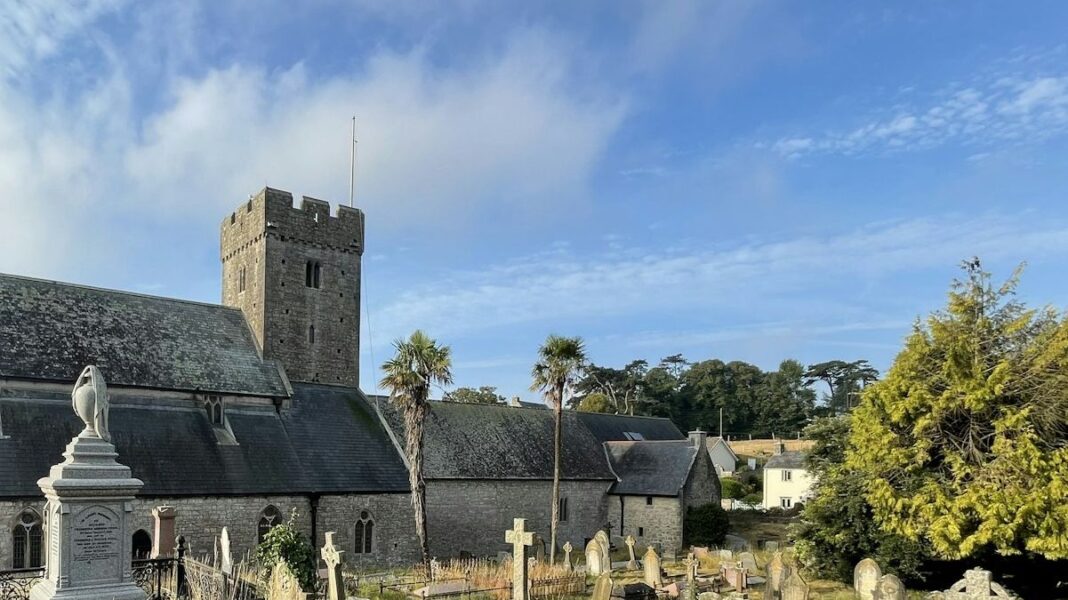
Header Photo by Robert Dicks on Unsplash